The req was approved in October. The posting went live the first week of November. The first interviews happened in early December, and the offer went out just before the holidays.
The start date is January 12.
Nobody made a mistake. Every step took the time that step normally takes. That is what an approved role costs you when the process begins with a job ad.
There is a version of this that takes four days, and it starts by not posting the job.
The Short Answer
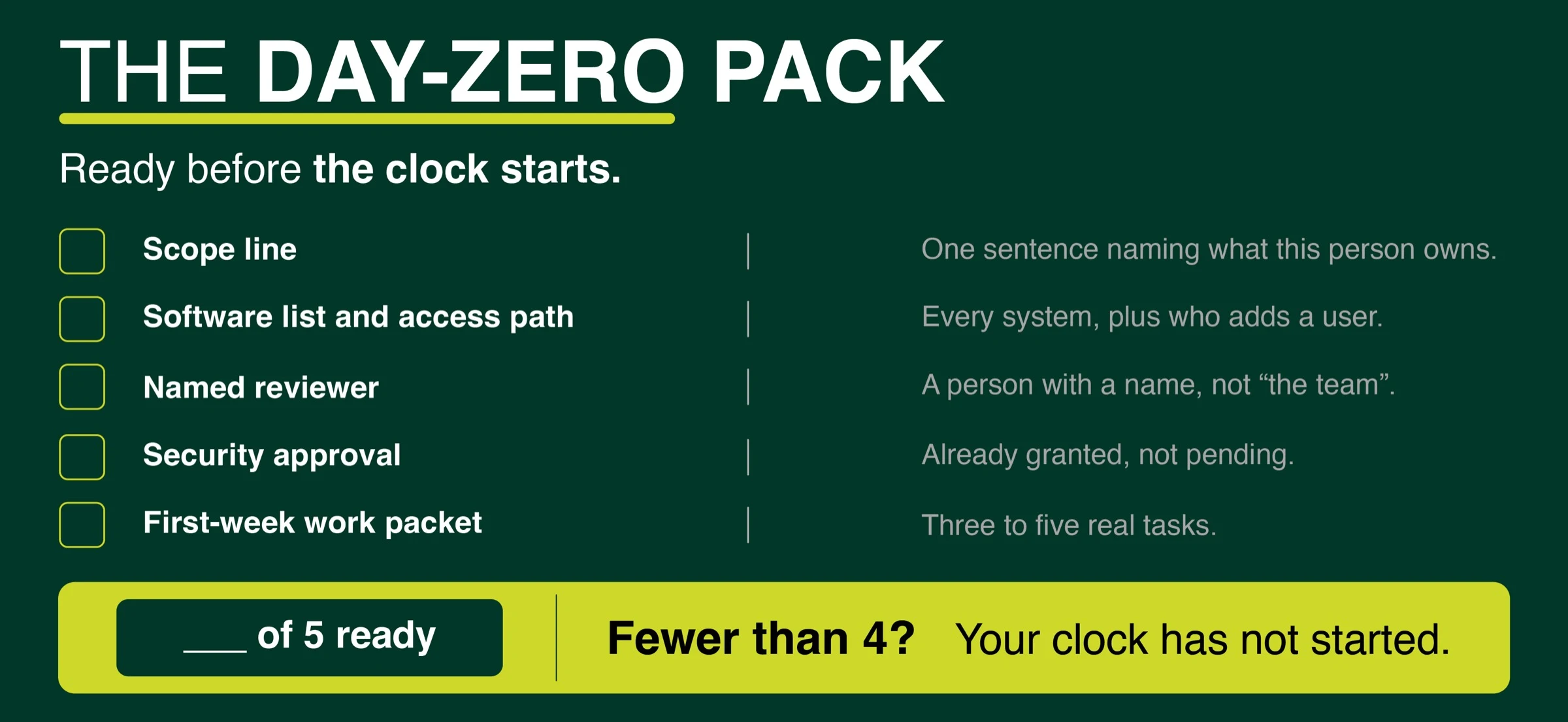
You hire from a pre-vetted bench instead of opening a req. Profiles arrive within 48 hours because the assessment already happened. You interview and decide on day 3, and the person starts on day 4. It only holds if three things are settled before day 1: the scope, software access, and your security approval. If those are not ready, four days becomes three weeks.
Why the Open Role Costs You 73 Days
CPA-required accounting roles now take an average of 73 days to fill, which is 41 percent longer than comparable roles without the credential. That figure comes from Talentfoot’s 2026 time-to-fill data.
It is not an outlier. In Personiv’s 2026 CFO Pulse Survey, 84 percent of finance leaders said the accounting talent shortage still affects their organization. Another 42 percent said open finance and accounting roles take more than 60 days to fill. The average organization is carrying five open finance roles at once, up from two in 2024.
We have written elsewhere about what those 73 days cost a firm, and this post will not re-argue it.
What is worth naming instead is what the firm gives up while the clock runs, because it rarely appears in a budget.
Somebody absorbs the work. Usually a partner, and usually at the end of a day that was already full. Client deliverables move to next month, which is fine once and a problem by the third time. Reviews get shallower, because the person doing them is doing three other things. And your best senior gets a quiet signal about how long help takes to arrive.
None of that shows up as a line item. All of it shows up in capacity.
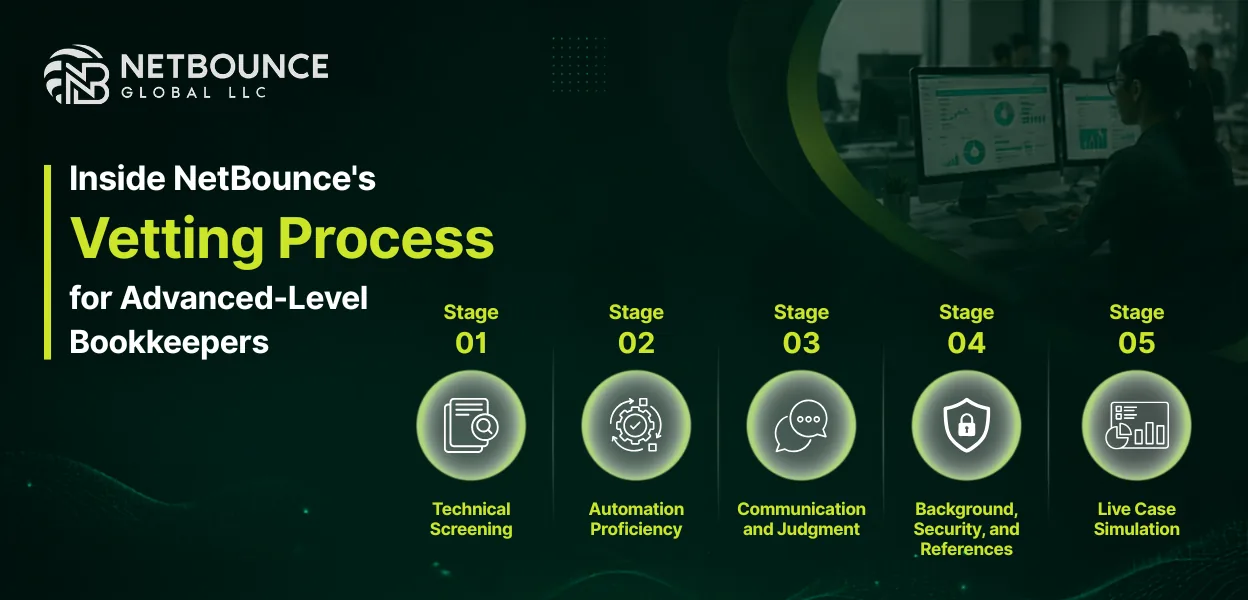
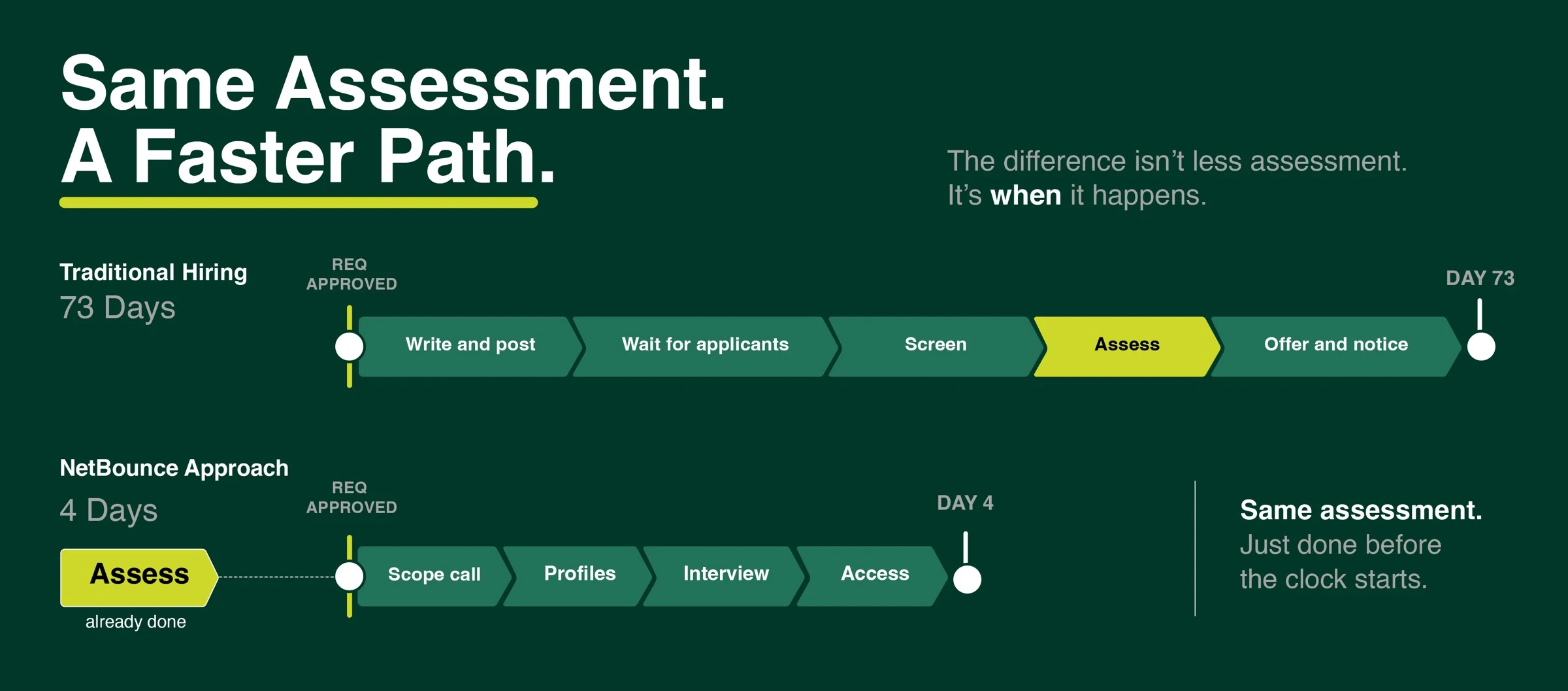
Here is the part worth sitting with. Those 73 days are not the market being slow. They are the arithmetic of a sequence that begins after the vacancy exists. Write the posting, wait for applicants, screen them, test them, check them, negotiate. Every one of those steps is assessment, and every one of them starts from zero on the day you approve the role.
The bottleneck is not the market. It is that you are starting the assessment after you already need the person.
What Bench Placement Actually Is
Bench placement means hiring from a pool of accounting professionals who have already been assessed, tested, and background-checked before you asked for anyone. A recruiter starts searching when you make the request. A bench has already searched. That is the entire difference, and it is why the timeline collapses from months to days.
To be clear about the model: this is staffing and co-sourcing, not outsourcing. You are not handing a client to a vendor. You get a named person who works inside your team, and your firm keeps the review, the client relationship, and the sign-off. What changes is where the person sits and who runs their payroll.
| Open req or recruiter | Bench placement | |
|---|---|---|
| When assessment happens | After you ask | Before you ask |
| First candidate contact | Weeks 2 to 6 | Within 48 hours |
| What you receive | Resumes to screen | Assessed profiles to interview |
| Who tested technical skill | Usually nobody, until you do | The provider, before you saw them |
| Your first decision point | Which resumes are worth a call | Which assessed person fits your team |
| Realistic time to start | 60 to 73 days | 4 days |
The row that matters is the one about who tested technical skill. On an open req, the first person to genuinely test whether a candidate can reconcile an account is usually you, in an interview, in week five.
The Day-Zero Pack
Four days is not a promise a provider can make alone. It is a promise about a sequence, and the sequence only runs if your side is ready before the clock starts.
Five things have to be settled. We call it the Day-Zero Pack. And if you are not sure the business needs an accountant yet, walk the decision tree first. And if you are building more than one role, the hub on the eight roles and the build order comes first.
| # | Item | What “ready” means | Who owns it |
|---|---|---|---|
| 1 | The scope line | One sentence naming what this person owns. Not a job description | Partner or manager |
| 2 | Software list and access path | Every system named, plus how a new user actually gets added | Whoever administers your stack |
| 3 | The named reviewer | A specific person, by name, who reviews this person’s work | Named, not “the team” |
| 4 | Security approval | Already granted, not pending | Your firm’s approver |
| 5 | First-week work packet | Three to five real tasks, not orientation | The named reviewer |
A word on each, because “ready” is doing more work there than it appears.
The scope line should fit in one sentence. If it takes a paragraph, you are describing a person rather than a job, and the match will be guesswork.
The software list needs the access path, not just the logo. Knowing you run QuickBooks Online is useless on day 4 if nobody knows who can add a user.
The named reviewer has to be a person with a name. “The team will support them” means nobody owns it, and an unowned hire is the most common way a good placement fails.
Security approval must already be granted. This is the single most common reason four days becomes three weeks. Not because the approval is hard, but because it usually has not been asked for yet, and it sits with someone who is in meetings all week.
The work packet should be real work. Three to five actual tasks, not a reading list. It is how you find out in week one rather than week six whether the match is right.
Here is the threshold, and it is worth being blunt about it. If fewer than four of those five are ready, your clock has not started. A provider can hand you profiles in 48 hours regardless. You cannot act on them.
The Four-Day Timeline, Day by Day
Day 1: The scope call
A 30 to 45 minute conversation, not a briefing document. We ask what the person will own, what software they will work in, what your review rhythm looks like, and what overlap hours you need.
The output is not a job description. It is a role match: which rung, which skill profile, which software depth. If you are still deciding between seniority levels, this is the call where it gets settled. Our remote accountant placements span both the junior and senior bands, so that decision happens here rather than after.
Day 1 also confirms your Day-Zero Pack. If security approval is not in hand, we say so on this call rather than on day 4.
Day 2: Profiles arrive
Three or four assessed profiles, within 48 hours of the scope call.
A profile is not a resume. Each one carries the results of technical assessment, plus a communication assessment and background check status. It names the software the person has actually worked in and to what depth, and their availability against your overlap window. You are reading evidence, not claims.
This is possible only because none of that work started when you called. It was done before you existed as a client, which is what a bench is.
Day 3: You interview
Your interviews, your questions, your call. We do not sit in.
Most firms run 30 to 45 minutes per candidate and speak to two or three. If you want a structure for it, our 12 interview questions for a remote accounting hire are built to expose real GAAP and reconciliation depth rather than rehearsed summaries. Use those rather than anything we would say in a sales call.
You decide at the end of day 3. If none of the three fit, you say so and we go back to the bench, which costs a day rather than a month.
Day 4: Access and handover
The administrative day, and it is short when the Day-Zero Pack is ready.
Individual NDA signed. VPN access configured and MFA enrolled. Your approver grants software access using the path identified on day 1. The named reviewer hands over the work packet and books the first check-in.
The person starts on real work that day. Not orientation, not shadowing. The three to five tasks you defined before the clock started.
The 48-Hour Profile Test
If a provider needs more than 48 hours to show you assessed profiles, they are recruiting against your requirement rather than placing from a bench.
That is the one signal in this industry that cannot be faked. Anyone can claim a talent pool. Anyone can say “pre-vetted” on a homepage. But the gap between your request and an assessed profile landing in your inbox measures when the assessment happened. That cannot be gamed. A bench answers in hours because the work is done. A search takes weeks because it has not started.
Two more questions worth asking anyone, including us:
What specifically was this candidate tested on? A real answer names the assessment: reconciliation exercises, software tasks, written communication. A vague answer about “rigorous screening” means resume review.
What is the written replacement commitment? Not whether they will replace someone, but the timeline, in the contract.
For our part: NetBounce Global places from a bench assessed on seven parameters covering technical skill, software proficiency, communication, and background checks. Profiles land within 48 hours, placement runs about four days, and replacement is contractual at four business days.
When the Four-Day Route Is the Wrong Call
It is not right for every seat, and there are four situations where it clearly is not.
You need someone who can sign. If the role requires US CPA licensure to sign or issue, that person has to be a licensed US hire. No offshore placement changes that.
You need someone who owns the US client relationship. A bench hire can join client calls and answer questions. If the role is fundamentally relationship ownership, hire locally.
You need deep state or industry specialization. Multi-state nexus work, or a niche vertical with genuinely unusual treatment, may justify a longer search for exact experience.
Your processes are undocumented. If the work lives in one person’s head, no hire lands in four days, offshore or otherwise. Document first. That is worth doing regardless.
And if you have a strong local pipeline and ten weeks of runway, use it. Speed is only valuable when you actually need it.
Then our own limit, which we would rather say than have you discover. Four days is the placement timeline, not the productivity timeline. Day 4 is when someone starts real work. Full load usually lands somewhere in weeks three to five, depending on how documented your processes are and how quickly your reviewer gives feedback. Anyone promising full productivity on day 5 is selling you something. To check the ramp for yourself, use the Four Numbers to measure at day 30.
The 73 Days Are a Sequence Problem
Those 73 days are not evidence that the market is slow. They are the cost of starting the assessment after the vacancy exists.
Move the assessment earlier than the vacancy and the arithmetic changes completely. That is the whole idea behind a bench, and it is why four days is a real number rather than a marketing one. Nothing in the sequence is rushed. The slow part simply already happened.
That is what we do. NetBounce Global keeps a bench of accounting professionals assessed on seven parameters before any firm asks for them. That is why profiles reach you within 48 hours and placement runs about four days rather than 73. Rates start at $10 an hour. The person is dedicated to your firm rather than shared. They work your hours in your software, under VPN-only access with MFA, inside an environment that is ISO 27001 certified and covered by a SOC 2 Type II report. If the fit is wrong, the four-business-day replacement is written into the contract.
Get your Day-Zero Pack ready first. That is the part only you can do. We will handle the rest of the clock.