People are asking this question everywhere right now. In accounting conferences. On LinkedIn. In firm owner Facebook groups. And the answers range from "absolutely, within five years" to "AI can barely balance a checkbook, stop worrying."
Neither of those is useful. So let me give you the honest version — the one that's actually worth thinking about when you're deciding whether to build your team differently.
Short answer: no, not in the way people fear. Long answer: it's more interesting than that.
What AI Is Actually Getting Good At
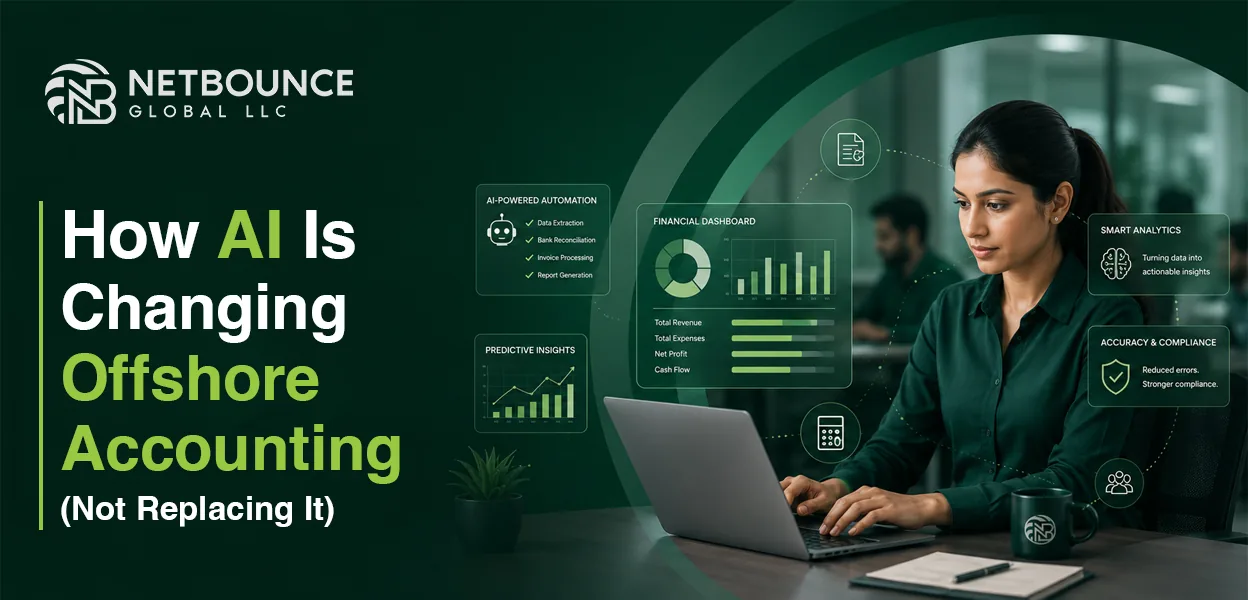
Let's start with what's true. AI has gotten genuinely useful in accounting. The pattern recognition is real. Transaction categorization that used to take an hour now happens automatically in QBO for most clean accounts. Invoice processing that required manual data entry can now be handled by OCR and classification tools. Simple reconciliations for straightforward clients run faster with AI assistance than without it.
None of that is coming back. That work is going to be increasingly automated, and the people doing it manually are going to need to move up the value chain.
But here's the part that often gets skipped in these conversations. AI does not handle the messy stuff well. And accounting is full of messy stuff.
The Part AI Keeps Getting Wrong
When a transaction doesn't fit the pattern — when a client has an unusual payment structure, a one-time event that changes the shape of their books, a tax position that requires interpretation — AI flags it, hesitates, or gets it wrong. That's not a criticism. That's just how pattern-matching works. It handles what it's seen before. What it hasn't seen before is a problem.
In a real accounting firm processing real client work, that "what it hasn't seen before" category shows up constantly. It's maybe 10–15% of total transaction volume. But it's the 10–15% that actually matters. The exceptions are where the mistakes get made. Where a client's books go sideways if someone isn't paying attention.
And AI cannot own the client relationship. The small business owner who calls because something looks wrong in their financials isn't calling to talk to software. They're calling because they trust a person. That trust is not transferable to an algorithm — not now, not in five years, probably not in twenty.
The Model That Actually Works
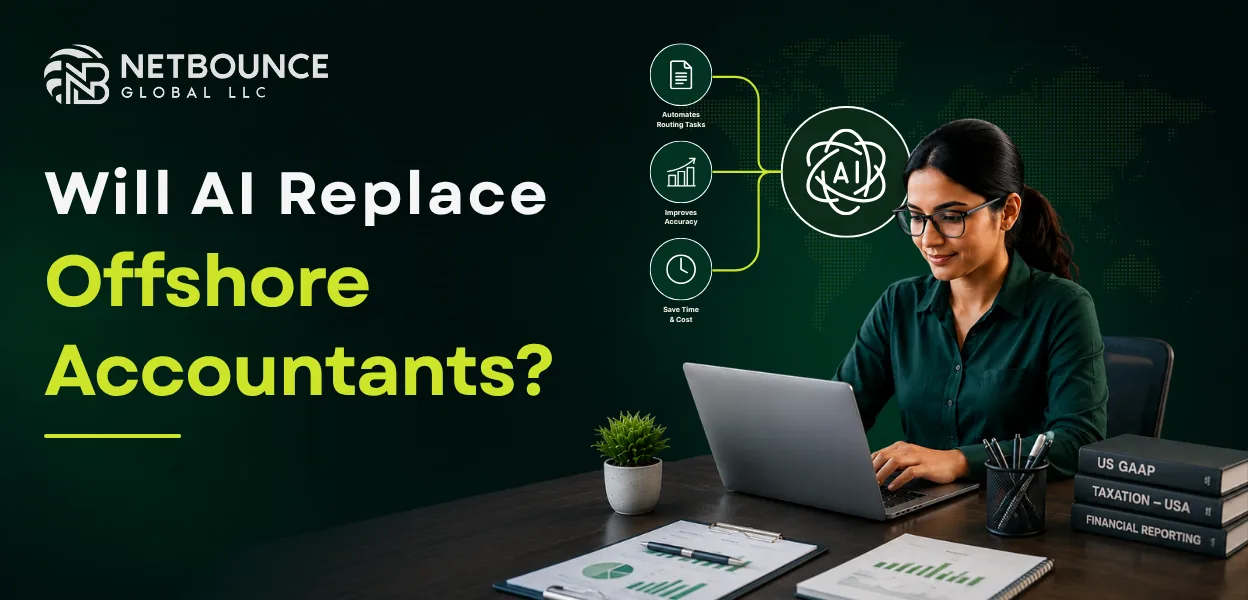
The firms doing this well in 2026 aren't choosing between AI and offshore staff. They're using both, and they've figured out what each one does best.
AI handles the high-volume, rules-based, clean transactions. Fast, accurate, no complaints about working weekends. A dedicated offshore accountant or bookkeeper manages the exception queue, reviews the AI output, catches what the algorithm missed, and handles the complexity that requires a human brain. The US partner focuses entirely on judgment calls, client relationships, and the advisory work that no one — human or AI — can commoditize.
It's not AI or offshore staff. It's AI and offshore staff. And between the two of them, the US partner's job becomes something close to what they actually wanted it to be when they started the firm.
The Honest Timeline
Will AI get better? Yes, meaningfully so. Will it replace offshore accountants entirely in five years? Almost certainly not.
Here's why. The US accounting talent shortage isn't going away. The pipeline of new licensed CPAs is shrinking, not growing. Demand for accounting work is increasing, not decreasing. Even if AI handles twice as much of the routine work as it does today, the gap between supply and demand for qualified accounting professionals grows wider every year.
The firms waiting to see how AI shakes out before building their offshore team are making the same bet every year and losing it. The talent gap is real today. Offshore accounting is already working for thousands of US firms. The only thing waiting accomplishes is a later start.
If you want to talk about what this looks like for your specific situation, we're happy to have that conversation.
Real Questions, Straight Answers
No. AI amplifies human capacity — it doesn't replace it. The firms getting the most value from AI tools already have strong human teams in place. Building your offshore layer now gives you the foundation to leverage AI tools effectively when they mature. Waiting means losing both the staffing advantage and the head start on the combined model.
Transaction categorization, invoice data extraction, and straightforward bank reconciliations are already partially automated. The judgment-heavy work — complex client situations, tax positions requiring interpretation, advisory conversations — is moving much more slowly. Your offshore specialist naturally shifts toward review and judgment work as automation handles more routine volume.