Everyone's talking about AI right now. And if you run an accounting firm, you've probably heard some version of this: "AI is going to replace accountants." Or maybe you've heard the other version — "AI is going to replace offshore staff first."
Neither of those is what's actually happening. And if you're making decisions based on either of them, it's worth slowing down for a minute.
Here's what's really going on.
What "Agentic AI" Actually Means (In Plain English)
You've probably used AI tools that help with one thing at a time — autocomplete a sentence, suggest a category for a transaction, generate a quick email draft. That's the old model. Agentic AI is different.
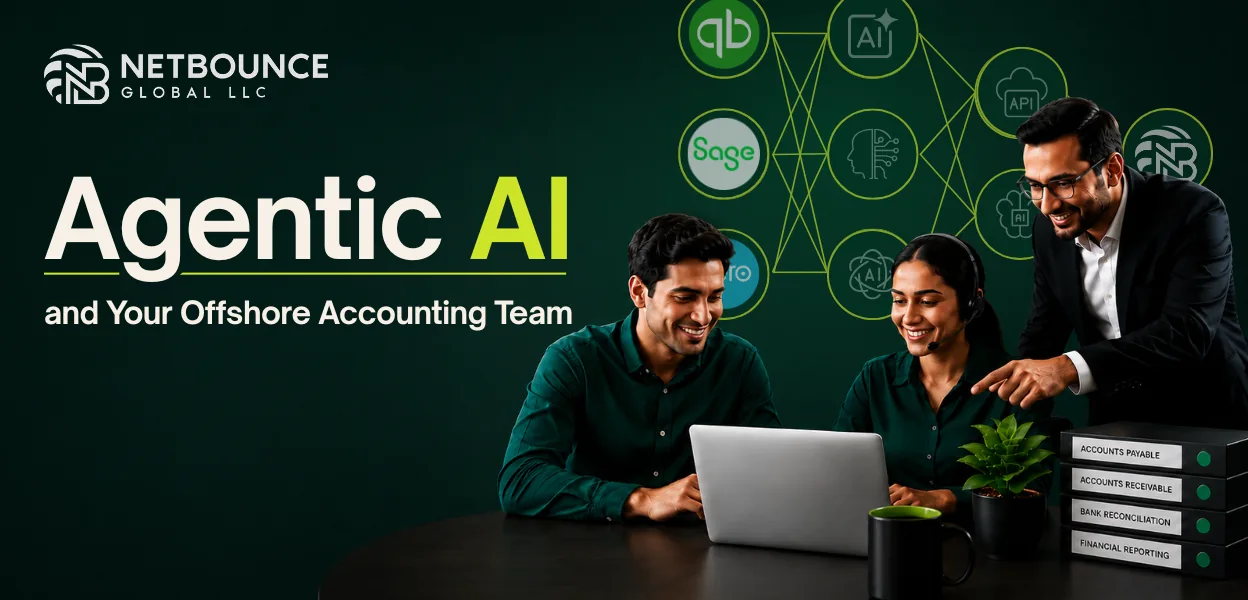
Agentic AI doesn't wait for instructions. It looks at a goal, breaks it into steps, and starts working through each one on its own. Think of the difference between a calculator and a new hire on their first day. The calculator does exactly what you press. The new hire figures out what needs to happen and tries to get there.
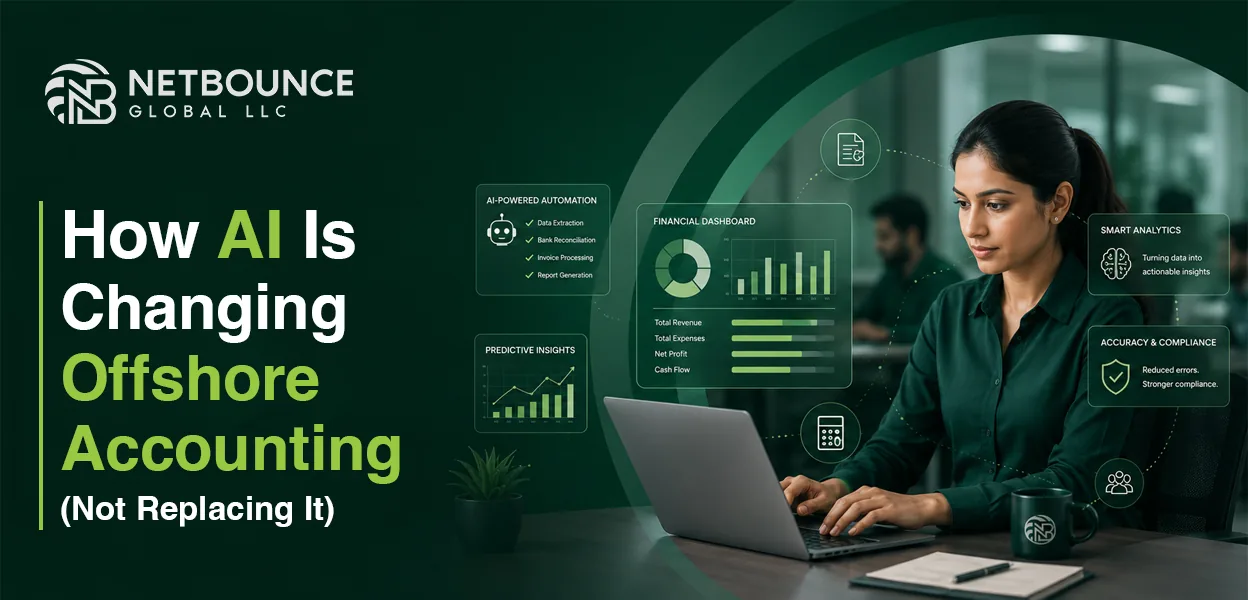
In accounting specifically, this means AI systems in 2026 can now pull bank feeds, run reconciliations, flag exceptions, and even generate a first-pass variance comment — all without someone clicking "go" at every step.
That sounds scary if you have a team of bookkeepers. But here's the part most people miss.
The 15% Problem That Changes Everything
Even the most advanced AI systems in accounting today get it wrong about 10–15% of the time. Not catastrophically wrong. Just wrong enough that a human needs to look at it.
Now imagine you're running a mid-size accounting firm processing 1,000 transactions a day. AI handles 870 of them perfectly. But that leaves 130 that need a real person — someone trained, experienced, and paying attention — to catch the issue, make a judgment call, and move on.
At volume, that exception queue becomes your biggest bottleneck. Not the AI's speed. Not your software. The human capacity to review, catch mistakes, and keep the work moving.
This is exactly where a dedicated offshore accountant or bookkeeper becomes more valuable, not less. Because someone needs to manage that review layer. And it needs to be someone good.
Why Your Offshore Team Member Gets More Valuable As AI Gets Better
Here's the reframe that most people aren't considering yet.
When AI handles the routine, what's left is the judgment work. The exceptions. The client-specific complexity. The things that require someone to actually understand your clients' businesses, not just pattern-match against a dataset.
A dedicated offshore specialist who's been working inside your firm for six months? They know your clients. They know which client always has unusual rent timing, which one has a note payable that looks weird every quarter, which accounts need a second look before month-end. That context doesn't live in an AI model. It lives in a person.
So as AI gets better at the routine, the people who understand your specific firm, your specific clients, and your specific standards become more important — not less. The specialist becomes the quality control layer. The human signature on the work.
The Firms Getting This Right in 2026
The accounting firms that are actually benefiting from AI right now aren't the ones waiting for the technology to be perfect. They're the ones who already had a good human infrastructure in place — and then layered AI tools on top of it.
The model looks like this: AI processes the volume. The dedicated offshore specialist manages the exceptions, reviews the AI output, and handles the client-specific complexity. The US partner focuses entirely on relationships, advisory, and the high-judgment calls that clients are actually paying for.
That's three layers. Each doing what it does best. And the middle layer — the offshore specialist — is the glue that makes the whole thing work.
If you're thinking about building this kind of team, the best time to start is before you need it urgently. The dedicated bookkeeper or accountant you bring on today will be fully integrated and deeply valuable well before your AI adoption hits its next gear.
The firms treating AI and offshore staffing as an either/or are going to find out the hard way that they need both.
Questions Worth Answering
No — and here's why. AI amplifies existing human capacity. It doesn't create it. Firms with strong offshore teams are using AI to make those teams more productive. Firms without them are still waiting on everything AI can't do yet. Build the human layer now; the AI layers on top of it naturally.
Transaction categorization, invoice data extraction, and straightforward bank reconciliations are already being partially automated. The judgment-heavy work — complex client situations, tax positions requiring interpretation, advisory conversations — is moving more slowly. Your offshore specialist shifts toward the review and judgment layer as automation handles more of the routine.
Yes — QBO, Xero, Lacerte, Drake, ProConnect. NetBounce Global assesses every candidate hands-on in the specific software your firm uses before you see their profile. They're not learning your tools on your time.