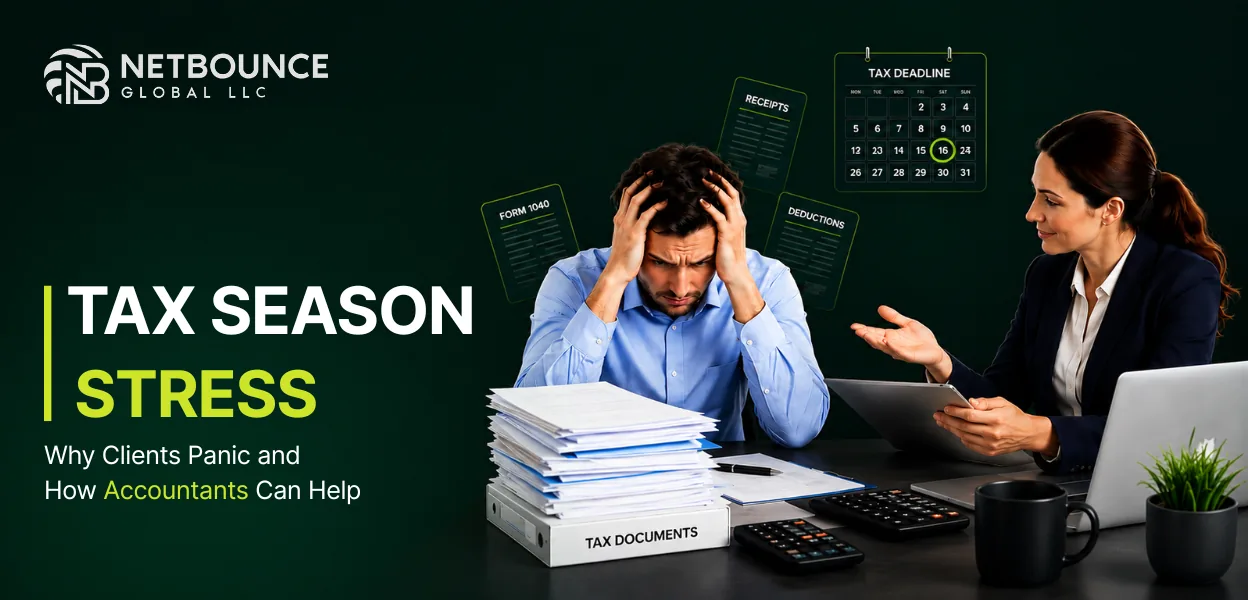
If you think tax season is just about forms and numbers, you're missing the bigger story.
For most taxpayers, tax season is genuinely emotional. There's anxiety about owing money. Dread about doing it wrong. Confusion about rules that seem designed to be confusing. Anger at a system that feels stacked against them. By the time they walk into your office or upload their documents to your portal, many of them are already in a bad mood — and it has nothing to do with you.
The paperwork is technical. The stress isn't. It's deeply personal. And how your firm handles that stress matters more than most firm owners realize — because the clients who feel taken care of during tax season are the ones who become advisory clients, send referrals, and stay with you for decades. The ones who feel rushed, anxious, or dismissed are the ones who quietly shop for a new accountant the following fall.
Why Clients Actually Panic (It's Not What You Think)
Most firm owners assume clients are stressed about the tax bill itself. They're not — not primarily. The underlying causes of tax season anxiety are surprisingly consistent, and understanding them is the first step to helping.
They don't actually understand how taxes work
Two-thirds of Americans still struggle with basic financial literacy, according to ongoing research from the National Financial Educators Council and the FINRA Investor Education Foundation. W-2s, deductions, credits, withholdings, quarterly estimates, schedules — it all feels like a language the client was never taught. When they see they owe more than expected, it doesn't feel like math. It feels unfair.
They've been putting it off for months
Let's be honest — nobody wakes up excited about doing their taxes. So many taxpayers wait until the last possible moment. But by the time they start, the deadline is close, they're rushed, and rushing makes everything worse. Missed documents, forgotten expenses, hurried signatures. The stress compounds the avoidance.
They fear the IRS more than they should
A significant portion of tax anxiety is pure fear of audit or penalty. Even clients who have nothing to hide treat every line item like it might trigger scrutiny. That fear is largely misplaced — audit rates for individuals earning under $500K remain well under 1% — but fear doesn't respond to statistics. It responds to reassurance from someone they trust.
They have no idea what you actually do
This one surprises accountants. Many clients don't understand the difference between a preparer who just enters numbers from documents and a genuine advisor who's looking at their whole picture. They assume "accountant" means "person who does taxes" — so they treat tax season as the totality of the relationship. That's a lost opportunity for the firm and a source of anxiety for the client.
The Real Cost of Stressed Clients to Your Firm
Stressed clients cost more to serve. That's the operational truth nobody talks about.
They call more. They email more. They miss meetings. They send documents in pieces. They second-guess drafts. They need reassurance before they'll sign. Every one of those touchpoints is time your team spends reacting to anxiety instead of doing the work. Industry benchmarks suggest a difficult client takes 2-3x more staff time than an organized one — for the same fee.
The compounding effect shows up in two places. First, margins. When you're pricing based on return complexity but serving based on client anxiety, your per-return profitability quietly disappears. Second, staff burnout. Your team feels every anxious phone call, every panicked email at 9pm. Tax season ends and your good people think about whether they want to do this again next year. Some don't.
This is also why tax season ends up being the biggest churn window for accounting firm staff. The AICPA's research on firm staffing consistently points to January through April as the period when retention decisions get made — often silently, by people who don't say anything but start interviewing in May.
Fix the Experience, Not Just the Workflow
The most important shift a firm can make is treating client anxiety as a service design problem, not a client problem.
Here's what that looks like in practice:
- Communicate proactively, not reactively. Send a weekly status email during peak season even if there's nothing new to report. "We have your documents. We're three weeks out from filing. No action needed from you." That one email cuts inbound anxiety calls by 40-50%.
- Normalize the hard stuff early. If a client is likely to owe, tell them in early February, not March 30th. Give them time to adjust emotionally and financially. Clients don't panic about bad news — they panic about surprise.
- Use client portals properly. Not as a dumping ground, but as a clear "here's exactly what we need from you, here's what we have, here's what's left" status view. Visibility reduces anxiety more than anything else.
- Assign a human point of contact. Every client should know exactly who to email with questions. Not a generic inbox. A person's name. Anxiety collapses when clients know they have a real person on their side.
- Offer a post-season conversation. Even a 15-minute "here's what we saw and what to plan for next year" call converts tax anxiety into trust. It also surfaces advisory opportunities that the compliance engagement never would.
What Good Client Service Actually Looks Like
There's a gap between what firms say they do and what clients actually experience. The gap shows up in small moments.
A great accountant isn't the one who files the most returns per hour. It's the one whose clients feel like they're being listened to. Who asks about the side business the client started last year instead of just processing the W-2. Who picks up the phone when a client emails in a panic at 8pm on April 10th, because they remember what it felt like to be the person panicking.
The best accountants we've seen in 2026 build what you could call "emotional margin" into their tax season. They don't just plan capacity for returns. They plan capacity for conversations. They don't just track deadlines. They track which clients are likely to feel anxious and which aren't — and they preempt the anxious ones with proactive check-ins before the client has to reach out.
This is harder than it sounds. It requires bandwidth. Which is exactly where most firms run out of runway.
The Capacity Problem That Creates the Stress
Here's what most firm owners won't say out loud. Client anxiety during tax season is often downstream of firm capacity. When your team is overloaded — when there aren't enough hands to do the prep work, reply to emails, and have the reassuring conversations — clients feel the pressure even if nobody tells them there's a problem.
The tell is when clients start saying things like "I feel bad bothering you" or "I know you're swamped." That's not client empathy. That's your firm's capacity stress leaking into the client experience.
Fixing this isn't primarily about process. It's about having enough people. The firms with the calmest, most supported clients during tax season are the ones that go into January with genuine capacity — not the ones relying on 80-hour weeks from an exhausted team.
That's where offshore staffing earns its place in the tax season playbook. A dedicated offshore tax preparer working your hours and your software, handling return prep and first-pass review, frees your domestic team to do what clients actually need — conversations, reassurance, planning, judgment. The tax prep gets done. The client relationships get stronger. Your team gets to breathe.
What to Remember
Tax season stress is a human problem with an operational solution. Your clients aren't panicking because they're difficult. They're panicking because the system is confusing, the stakes feel high, and most firms they've dealt with haven't made them feel cared for.
The firms that build emotional margin into tax season — that actually have the capacity to listen, reassure, and advise — win the long-term client relationships. The ones that don't win the compliance work for a few years and then lose the client when they need a real advisor.
If your firm enters the next tax season with the same capacity as last season, and last season felt hard, something needs to change on the capacity side. Otherwise the client experience won't change either.
Common Questions About Client Anxiety During Tax Season
Some, yes. But most of the anxiety you see during tax season is downstream of two things — clients feeling uninformed about their own situation, and firms being too stretched to communicate proactively. Both of those are fixable. The baseline anxiety about "I might owe money" is real but manageable when the firm is prepared.
The pattern is usually clear from prior years. Clients who called multiple times last season, missed document deadlines, or ended engagements feeling rushed are very likely to repeat the pattern. Flag them in January, not March. Proactive outreach cuts their inbound anxiety significantly.
Indirectly, yes. When your team has capacity, they reply faster, communicate more proactively, and handle ambiguity better. The client experiences that as "my accountant is on top of it." When capacity is tight, the opposite happens — even the same firm feels harried to the same clients.
Yes, if the additional time is significant and structural. But raising prices without improving the experience usually just accelerates churn. The better move is to package anxious-client-prone work into an advisory relationship that pays better and structures the communication upfront.
Going silent. When workload peaks, internal communication with the team and external communication with clients both tend to degrade. Clients interpret silence as neglect. Team members interpret silence as chaos. The firms that maintain communication discipline through peak season have the best outcomes on both sides.